
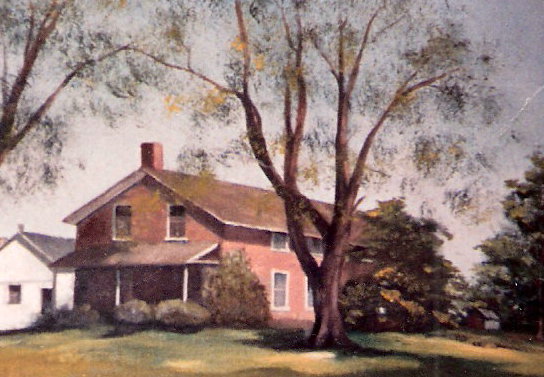
The spruce hedge was planted by my father to provide wind break for the large, brick home built in the mid 1800’s by my mother’s ancestors. In my early memory, it seemed to provide a natural boundary for my roaming. Between the house and the spruce trees, to the west, was a large garden, a long row of perennial flowers, a grape vine and a generous apple orchard. The hip roofed, weathered barn with the silo and milk house formed a southern boundary for my world. The garage where Dad parked his Monarch car,( with keys in the ignition always) was attached to the small work shop, that housed my brother Cecil’s welding machine and cutting torches. It had southern exposure windows and a wood burning barrel, making it a pleasant destination on a cold day. The implement shed that housed the three Case tractors , along with some harrows and ploughs, was not far away. . Beyond this were the pastures and crops, a total of 100 acres in all.
As I grew older, exploring beyond the spruce hedge and walking along the fence rows was a near magical experience. Trees, brush, long grass , rocks, and rail fences of cedar,provided home for small animals. I recall seeing groundhogs peaking out of their burrows, as I passed. Early spring was memorable, because toward the back of the 100 acres, was the flat land that turned wet with the melting snow, forming a creek. It created wondrous fun, following its trickling and meandering path across the fields, ignoring property lines, as we dammed up here and released there.
Another sign of spring was walking up the long lane, walking home from school and seeing the long, pulley clothesline full of wool blankets and comforters having their yearly “March wind “ treatment,. They got whipped with that cool damp wind, removing anything that should not be there.
Early spring was also the time for butchering enough pigs for our own meat. . There was an air of excitement on that day. It was probably early March, with traces of snow still on the ground, and a cold nip in the air mingling with the smoke from the maple fires. The largest one was under a cast iron pot, to render down the fat for the years supply of lard. An area was cleared in the woodshed to make a butchers table for cutting up hams and bacon for curing and smoking. Also, the meat for sausage was ground up. I recall watching my Dad expertly winding the intestines around his left hand as he carefully scraped them, and dropped them into pails of water. The sausage meat was expertly seasoned and stuffed into the casings. It seems to me the meal that first day was always, back bone, or loin I suppose. To this day, I cannot recall having any sweeter or more delicious meat than that fresh pork. My Mom and my big sisters coiled those sausages into sealers and “canned’ them. The hams and shoulders were put into large oak barrels, for a certain curing time before they were hung in the smoke house,. It is still difficult for me to enjoy any other ham, having the memory of that dry, smoky version. Still today, wood smoke will evoke strong memories of my childhood.
About this time of spring the sap would start to run and it was decided we would go out to our friends, the Bakers, to watch the sap boiling operations. That historical maple bush is still there, today, but surrounded by high- rise apartments and acres of housing.I still remember the sparks from the wood fires, and of course that wonderful smell of smoke mixed with the sweet steam of the evaporating sap filling our lungs. There would usually still be some snow underfoot. Cool nights and sunny days with the temperature just a bit above freezing was required for sap to run.
Another exciting day in spring was when, having trudged the one mile and a quarter, up the gravel road, to find that the summer kitchen had been cleaned up and prepared to cook and eat in for the summer months, which was meant to keep the rest of the house cooler. ( I know, I know it sounds like a total luxury to have an alternate kitchen ). I remember the scrubbed wood floor, the long pine table ready to set for supper, all the window glass was sparkling and a wood fire was crackling in the range. It seems to me there would be dandelion greens added to our meal at this time and a little later, fresh asparagus. The scene can be completed in my memories right now with a robin singing outside the west window. The air was damp and you could feel and smell the growing going on around us. A batch of newly hatched chicks were growing in the brooder house. Grass was greening, dandelions were peeking just to name a few things.. MAGIC, REAL MAGIC! As soon as the pasture was ready, the cows were allowed out to roam and graze, after having been cooped up in their stanchions all winter, surviving well on hay, ground grain, turnips from the root cellar. Soon as the land was dry enough, the crops would be seeded and I remember Dad at the end of our long table announcing, “the oats are up”.
I want my idyllic farm life to be on record, for my grandchildren. It will no doubt, be focused on the crops and foods we grew and ate. My daughter Janine, says it should be recorded because so many young children barely know where food comes from.
 Kathryn Morrison
Great post and interesting write more!!
LikeLike
Thanks Kathy
I can picture a lot of the scenes you so aptly describe . Have sent your URL to Dale so hopefully she can open up all the seasons on the farm.
See you Wed
Sharon
On Sun, Jan 15, 2017 at 8:28 PM, Kathryn Morrison wrote:
> Kathryn Morrison posted: ” The spruce hedge was planted by my father to > provide wind break for the large, brick home built in the mid 1800’s by my > mother’s ancestors. In my early memory, it seemed to provide a natural > boundary for my roaming. Between the house and the spruce t” >
LikeLike
Very interesting Kathy Keep up the good work. Myrna
LikeLike
Thanks for a peek into your world. I experienced a small farm in Brooklyn when I was growing up and you brought back lovely memories.
LikeLike