Category Archives: memoirs

MARION’S MEMORABLE MEMORIAL

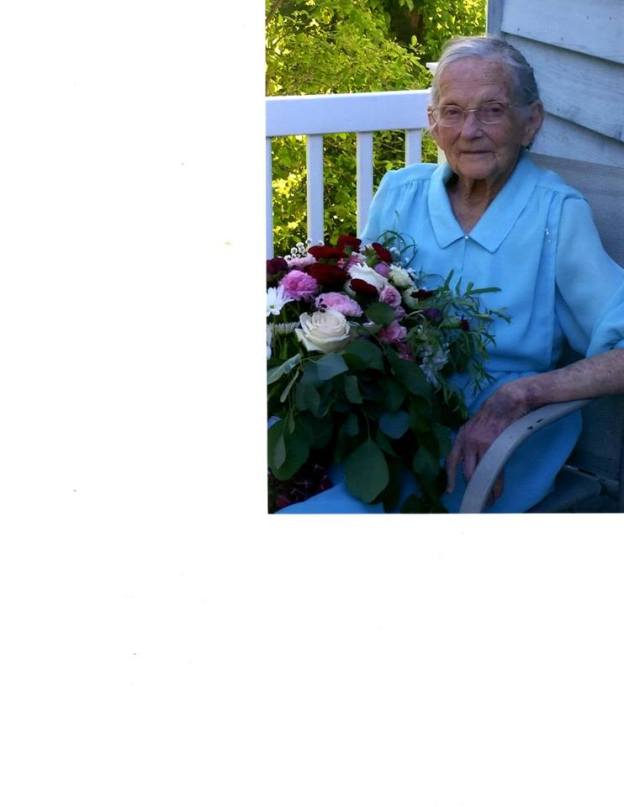
My eldest sister Marion left us this past year. She celebrated her 90th birthday here, in Stouffville, last September.  At that time she was still driving her own van into town in Indiana where she has lived since she married Norman Wenger in 1952.

She had a weekly game night that she enjoyed with her friends, and helped her daughter with the bed and breakfast they operated in the beautiful farmland  one hundred miles south of Chicago.  She was  a lively lady with a great sense of humour. However, her heart began giving her trouble and she went for what was to be a “little” surgery, but things didn’t go as expected and by last June she slipped away, so well cared for and loved by her daughters, daughter in laws and grand daughters , sons and grandsons.   A LIFE WELL  LIVED!

I travelled to Indiana to the funeral, and I hereby pay tribute not only to my sister but to the rural church community that welcomed her so many years ago.  We were astounded by the number  of people who came to the visitations spotting us, her four sisters, who they thought looked like their beloved Marion. When I was a teenager, I would make extended visits to Marion, Norman and their family, and I got to meet some of the church young people.  In fact I celebrated my 16th Birthday with a group of Indiana girls.

 Now, we arrived at the Yellow Creek Frame Mennonite meeting house on this lovely June morning. We assembled inside, with Marion’s children, some of whom have grandchildren themselves.  The building was packed and we went to the front where we sat in silence. The floors were old restored  wood, with white walls, and sunlight was streaming   through sparkling clear, square window panes. Green leaves fluttered outside.  The closed casket was just a few feet away and behind that were the five ministers who share the caring of the believers. (no paid clergy here). Momentarily, one of the men, announced that we would open with a hymn and  a lone voice from the congregation started and instantly hundreds of voices in wondrous four part harmony, swelled, and soared  to fill that building,  Jesus Thy Boundless Love to Me. I tear up now as I type this.

The first speaker, unannounced and with  no introduction, arose and with a gracious presence spoke of Marion as Grandma, ( he is married to one of her grand daughters). He shared meaningful scriptures, but most importantly, spoke of how Marion would always ask about their lives. He suggested that she would be a little embarrassed about this large gathering for her.. He spoke of her humour. We then sang the very poetic hymn, On Jordon’s Stormy Banks I Stand ( and cast a wistful eye to Cannan’s fair and happy land, where my possessions lie.)

The second speaker, had been Marion’s only request for this occasion and I could soon see why. Again, I don’t know his name, but he exuded love and true humility. He alluded to the fact that he was a new minister and Marion was a person who  encouraged others,  including himself.  A senior minister, also shared of his experiences with Marion and then read the obituary and a most moving letter from Marion’s many, many  grandchildren .

We filed out again into sunshine and a lovely view of rolling farmland, where the burial ground was. After she was lowered into the ground, the young men, who seemed exceptionally handsome, to me, started shovelling, eventually handing their shovels to their Dads ,uncles, aunts, and   girl cousins.

I  have called it memorable , because it has been a LONG  time since I have attended a funeral that was so beautiful in it’s simplicity. It contained elements that these folks, who for generations now, have continued with the  spiritual traditions, of a brotherhood, with deliberate lack of emphasis on clergy. In agreement, or not,my feeling is,  they have at least attempted to prevent the powerful or charming taking  power, as Jesus warned  in Matthew 23.

WE MISS YOU MARION!            Marion Pauline Reesor Wenger  1925-2016
january-3-171

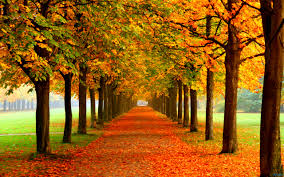
REMEMBERING MY FAMILY FARM IN FALL

download

In late November 2002, Alex and I drove from Edmonton, across country to Cleveland Ohio to participate  in Fabtec, a very large convention for steel fabricators.

There was literally hundreds of miles of flat farmland that rolled by my window as Alex kept his foot on the accelerator. It was  November, so there were  no lush crops growing or even acres and acres of golden wheat or barley swaying  in the sunshine, which I find beautiful.  Instead, there was miles and miles of rather bleak landscape, tilled land with a dusting of snow, like icing sugar from above. Instead of it being a little depressing, as it may have been for some travellers,  it surprised  me to find a peaceful feeling surrounding me as we travelled ever farther east.  Where did the peace come from?   It has  become clear to me.

Summer on the mixed farm were I grew up in Southern Ontario, was a very productive time, crops to cultivate and   weed, hay to gather before the rain came.  Grains to be threshed or combined, more recently.  Never  rushed or out of control  and never did we delay or postpone our three meals a day. The days had a rhythm that brought a sense of  ALL IS WELL.    Every day except Thursday noon , my Father sat at the head of the table and we all filed into our own spaces. five boys and five girls.My father went once a week with his 2ton truck with a load of produce, plus eggs and New York dressed chickens, even some poor hens in gunny sacks for his Jewish customers,  selling  to  Greek, Chinese and Italian grocers along The Danforth and Queen  St. in “the city”  (Toronto) .Back to the large family, it dwindled as the years went on and  I, being the youngest was left with my Dad, brother Ken and an UK hired hand.

As autumn, or fall as we called it, arrived, the program changed from growing , into harvest and store.  The days were cooler, sometimes we needed to rescue garden things from impending frosts.  Rutabagas, were  to be dug and hauled into the large root cellar, potatoes also.  Apples ripened, ready  to be picked and stashed,  for the whole winter.Cabbages and pumpkins stored well, as did beets.  Everything we needed to eat WELL all winter was day by day hauled in before the cold arrived.

I tell my grandchildren, our grocery lists were nearly non-existent. Mr.Johnson, grocer from  Gormley  would call to ask Mom what she needed to have delivered this week.  She didn’t want to disappoint him, so she would order something like Old Dutch Cleanser (remember that) or Bon Ami to polish windows, and sometimes Kelloggs Corn Flakes, the  Sunday  morning breakfast.  In my day, after they stopped making their own vinegar, I remember him bringing his vinegar and it “glug glug glugged” into Mom’s jug.  By the way, I don’t remember any garbage either.  After the dog licked the butter wrappers they were thrown into the wood stove.  Tin cans were pretty well unheard of.  Flour and sugar were bought in bulk, honey in 40 lb pails, apple butter in very large crocks. These items were stored upstairs  in the “dungle kemmerly” some kind of German for dark closet. Talk about a “green” lifestyle.

The leaves changed to their spectacular colours and drifted to the ground  The black walnuts fell  with a thud from the trees. We kids gathered chestnuts on the way home from school, and there were mounds of coloured leaves to rake and jump into.

.,The loose  hay was piled under the hip roof of the  barn, for the hay burning cows in their stanchions on the lowest level. The  laying hens , up to 1,000, and the full  grain  bins  were on the middle floor. The silo was filled with corn silage for the cows, as well as the  crib was  full of dried corn.There was plenty of golden straw for daily, fresh bedding for the animals.

The   cellar of our large brick house  stored  potatoes, to eat and sell. There were  apples for the winter plus all the preserved fruits and in more recent times a monster freezer full of veg and meat.

WHAT SATISFACTION TO SEE THE YEARS PRODUCTION” SAFELY GATHERED IN ERE THE WINTERS STORMS BEGIN”

There you have it,  those bare bleak fields in the Canadian and American plains brought back that remarkable feeling of ALL IS WELL .  The animals as well as the humans can make it through another winter, and yes perhaps there  will be time for a little leisure.

(I  can’t remember much  leisure  though !!  We were of German descent we couldn’t help it.)

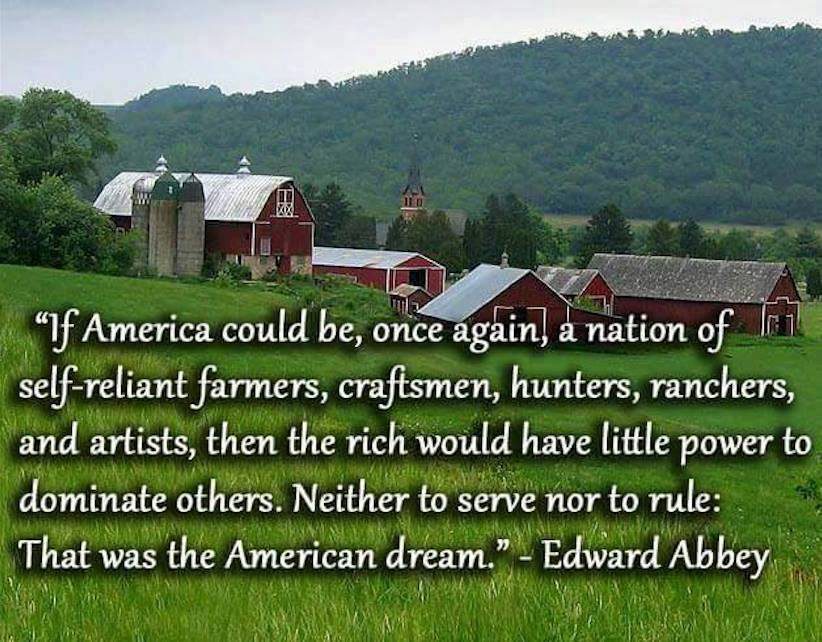
The picture below, I would of course insert Canada into this.   I love  the concept of “NEITHER TO SERVE NOR TO RULE”   Wouldn’t that be a beautiful world?

NEITHER TO SERVE OR RULE

NEITHER TO SERVE OR RULE

ScannedImage

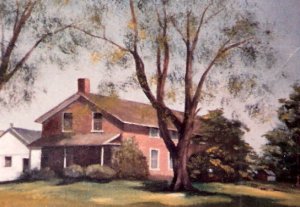
My Home painted by Evelyn Burkholder

“What is so rare as a day in June, then if ever come perfect days?”,

Whether we look or whether we listen, We hear life murmur or see it glisten……. James Russell Lowell

Summer mornings on the farm were exquisite. Lawns   lay green and velvety, perennial beds flowered in the flattering slant of sunshine from the east.  Rose bushes climbed and periwinkle ( we called it myrtle) crept up the foundation on the east side of the house. Bird song filled the cool air.

School was nearly over for the season.  Wild strawberries hid in the verdant ditches along the gravel road, providing  a tasty snack on the way home.  There were buttercups and daisies among other wildflowers. After they started spraying the ditches,  there were NO MORE. When does a wild flower  or fruit become a dreaded weed. Where they not designed for the pleasure of small children trudging that mile and a quarter through the heat? Someone told me recently, about their European friends wanting to coordinate their visit to Canada, when all those yellow flowers are blooming (dandelions). Does that not tell us a lot about what conditioning does to us?

The gardens were full of carrots, peas, beans, potatoes, onions, beets, cabbage, lettuce, cucumbers on and on we could go. Everything in neat rows, and weed free, thanks to the  in house staff. There were cherry trees tucked in between the smoke house and the spruce trees, for delicious sour cherry pies. ( one hardly sees anymore) Apples were forming on the orchard trees. Nearby were pear trees, raspberry canes

Strawberries were deep red and delicious, before they were bred for long distance travel, like today. Those strawberries only had to make it from the garden to the kitchen to top off Mom’s biscuits for strawberry shortcake, or mounded into pastry for a luscious pie. Some were preserved  by canning for a delectable bowl in the middle of winter, and jam, of course. Later came raspberries to be picked, preserved, as well as plums and pears.

At about this time of year, when peas were in full swing, Mom would dig a few tiny potatoes and wee carrots, and add then to the peas, in a smooth buttery white sauce. That is a wonderful way to eat, with a serving of beef, or chicken. How about a fresh lettuce salad dressed with cream, apple cider vinegar and a pinch of sugar? Applesauce from summer apples was so delicious with bran muffins.This was typical of everyday meals.  All from the farm, and oh so fresh and tasty.

We all had jobs to do, like weeding and thinning vegetables. As the summer holidays progressed, the picking of green beans, cucumbers kept me busy.

Some of our neighbors would bring their excess produce for Carl to take, every Thursday on his route along The Danforth and Queen st, supplying Greek, Chinese and Italian grocers with eggs, produce and New York dressed chickens. That evening, he would sit at his desk, filling small brown envelopes with cash for those neighbors and how proud I was when he had an envelope for me with my name written in his large scrawl, indicating how many baskets etc. or slicers (cucumbers) or asparagus bundled in  pounds.  Let me add, that money was turned back to him to put into the Canadian Imperial Bank of Commerce in Stouffville, talk about full circle. Money was to not to fritter away, but to invest.

Another highlight of summer was peach season.  Dad set aside a day to drive his truck down to Niagara area, and load it up with the most juicy and tasty peaches that were ripe and ready to eat, and can.  That evening  neighbors from up and down the road would come and pick up their order and all the women went into peeling and filling jars to can those beauties.My Mom tried very hard to fill 100 quart jars, and what a lovely addition  they were to our winter meals. That was just peaches, but there was plums and pears also . Delicious!

Also sweet corn was grown in enough quantity to sell in Toronto, plus for our own consumption.  I have pleasant memories of a mountain of freshly picked corn on the front yard, and  it was “all hands on deck” to bag it in the dark, within the circle of that yard light, casting shadows. We were fanatic that corn should be consumed as quickly as possible after it was picked from the stalk.   There seemed to be quite a collection of young men “helping” . Did it have anything to do with my pretty older sisters being there also.?

Everyone had a job to do on the farm, and we were aware of what it was, without being told.  TRADITIONS  are amazing. You can raise a family nearly without having to tell them (let alone repeat your requests) what is expected of them.

Cows were milked, chickens were fed, eggs were gathered( one of my tasks) beside all the gardening and tending the new crops.

I don’t usually feel like a senior, but writing this, might give me a clue,  this was a long time ago..  It was a wonderful way to live, enjoying the miracle of earth’s provision.


NORTH OF 60

cropped-9yellowknifemidnightsunc11.jpg
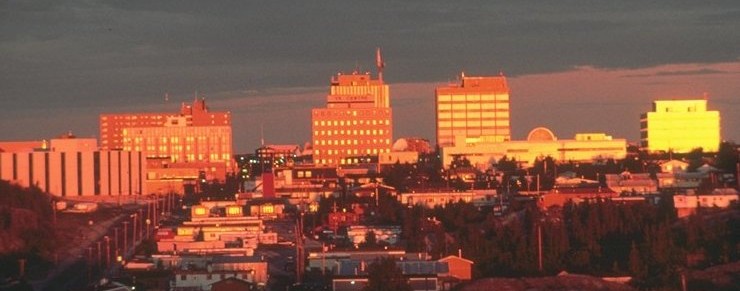
YELLOWKNIFE UNDER THE MIDNIGHT SUN

In the summer of 1974, we headed north to Yellowknife, leaving our country house empty, with good neighbors keeping an eye on it.
FYI, Edmonton is approx 500 Miles north of the US border, and it was another 500 miles straight north to the NWT border close to High Level Alberta. What surprised me, were the barley fields that
were looking good right up to the 60th parallel. There was still land being cleared by homesteaders at that time. What makes Alberta so different from Ontario for instance, is the absence of the rock shield, which gives Alberta more arable land than any other province. The super long days assist with the growth.
Now, just another 500 miles to Yellowknife, and at that time in history, it was gravel. We slept overnight at High Level, and drove north. I recall the clouds of dust far ahead, on the road, indicating an oncoming vehicle. It was a remote road, with no one around to help if you did have trouble.
Finally at he end of a long day and hundreds of miles of wilderness, we came upon a rather modern looking town, with an airport,which is how most folks got into town.

Johnny helped us find an apartment, furnished it almost entirely from his “junk” store. When folks left Yellowknife, they usually called Johnny to come by and buy the contents of their home or apt. so we were up and running quite quickly. By late fall, a fuel tank had been constructed down by the lake.
By later the next year, Gulf Oil (now Petro Canada) was looking for 3 60 Ft high tanks in Hay River, and because they liked the one that was built in Yk. they contracted Alex to build those, starting in 1976.The Federal Business Development Bank president for Western Canada called Alex and said he was coming up to go fishing with him. Alex was not a real fisherman, but he scrambled and he and Bob Whiteway and Dan Byer, who was comptroller at Yellowknife’s largest hotel,rose to the occasion.
Said the banker, while out on the lake,”you have asked for a loan to launch this oil business, but I am telling you, Imperial Oil is going to have you for breakfast, I will give you the money because you will make enough on your tank building to pay us back”
Texaco was agreeable to fill our tank with home heating fuel, so now we were in the home heating business, which turned out to be a heart break, when Esso, just lowered their price to customers, till we were out of business.

The following story is one that Alex really liked about Johnny R.
Johnny, was, I think from Saskatchewan and went into commercial fishing on Great Slave Lake, but in his words ” I didn’t know where those fish were, and I don’t think they knew themselves where they were”. He did not declare bankruptcy, but got a job in the gold mines, deep in the earth, as a blaster. To pay his debtors, he drilled 4 long, long shifts a week, and on the other days he went trapping to look after his family. Because he was such an early settler in YK, he owned several lots in the “old town”; before the government got the idea of taxing property owners.

During the years of trapping and mining, he fell behind in his taxes. By the time we arrived on the scene, it was getting very close to them seizing his land for taxes. With real conviction, he said, “I just didn’t think it was right for them to get my properties.”

One day while on the tundra, he was “drawn” to a certain outcropping of rock in the distance. When he got there he realized it was gold. Alex asked, “how much was there Johnny?” “Maybe the size of the back of a pick up truck”. So Johnny chipped off enough to fill his back pack and tramped back into town. He found an unsuspecting tourist who paid him a discounted amount, enough to settle his bill with the city.He knew if the authorities could trace that gold, it might start a mad rush.
One day Alex was in the mining office negotiating with them for a right of way across their property, to his tank. The man he was dealing with started to excitedly disclose that he had just seen a chunk of gold ore that was so pure, they had never seen anything close to it. He said the person who brought it in, would not disclose the source.. Alex knew and kept his mouth shut.
Later, talking to Johnny, Alex asked, “are you going back for more?”.

“Do you need money?” replied Johnny.    Alex thought it might be kind of a good idea, but Johnny said “you don’t need money, you just need to know how to live.” Alex never forgot that. Not to say he mastered it like Johnny, who was perhaps the most contented and happy person Alex had met. He said he would have no part of a mad rush for Gold, “people kill for gold”. he said. I don’t believe he said he would never go back if he needed money personally. We saw little children come to his door, to get their scrapped knees fussed over by Johnny. Local Native folks came to his door to borrow money to go to  a funeral in a distant community. “Do they pay you back” asked Alex. The answer was “yes, I am the only bank they have”. Alex saw him on a dreadfully cold night heading to the old town with the back of his ugly vehicle loaded with firewood for a widow lady whose boys had been drinking and failed to look after her.

This was a man who had no church affiliation, or dogmas, but he certainly had integrity and love, and he was always always looking after  “the least of these my brethren”.